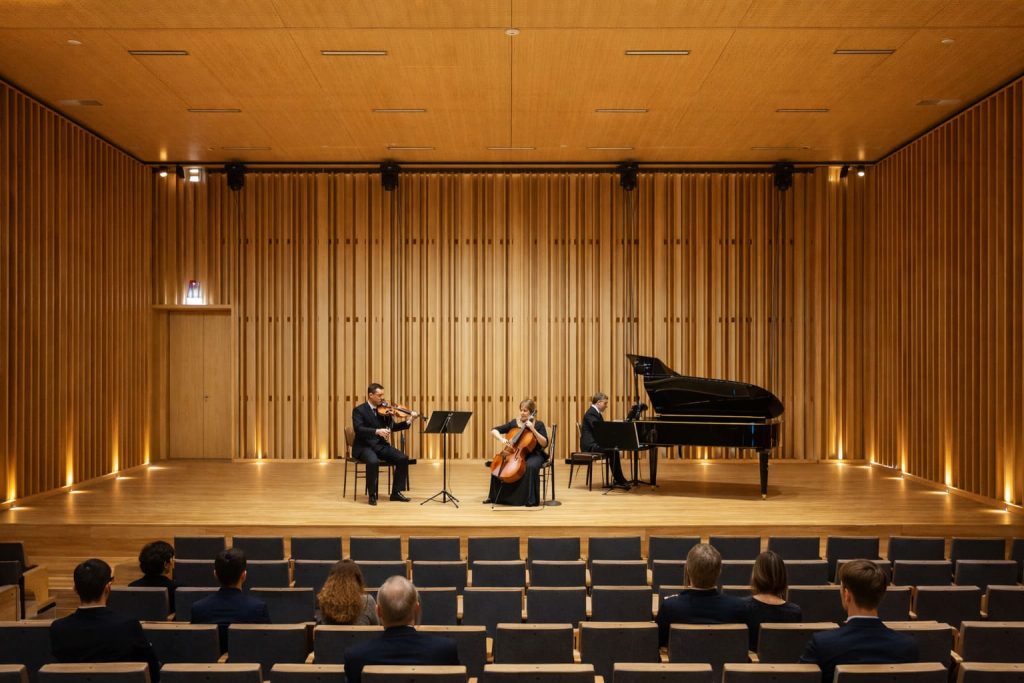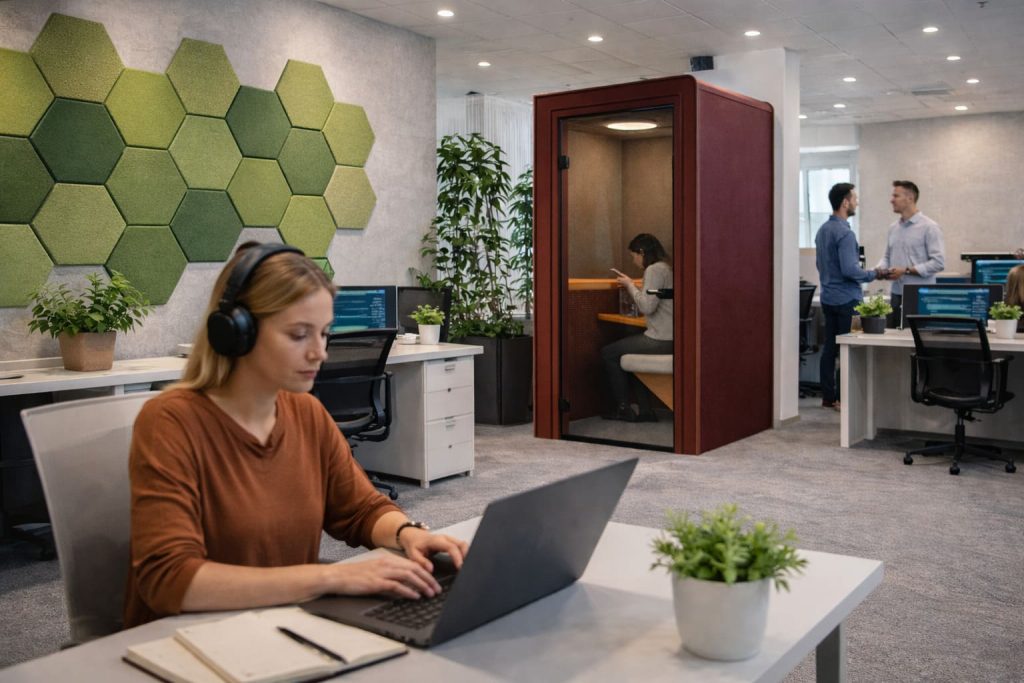
Modern offices are characterized by open spaces that foster collaboration and creativity. However, such work environments often pose noise problems, which impact employee productivity and well-being. In this article, we’ll explore how office acoustics impact work quality and what solutions can be implemented to minimize the negative effects of noise.
The role of acoustics in the work environment
Office acoustics refers to managing sound in a space to ensure a comfortable work environment for all employees. Research has shown that excessive noise in the workplace can lead to decreased concentration, increased stress, and even burnout. Major sources of noise in offices include coworkers’ conversations, phone calls, human movement, and the sounds of office equipment.
One of the key aspects of office acoustics is reverberation time, the time it takes for sound to be heard after it has been generated. Excessive reverberation time causes sounds to blend and become indistinct, which can lead to additional employee fatigue. Acoustic insulation between different office areas is also crucial, allowing for more effective space management.
Employees’ individual noise preferences should also be taken into account. Research shows that some people prefer a soft background noise to help them concentrate, while others require complete silence. Therefore, it’s important for offices to offer a variety of workspaces to suit different needs.
The impact of noise on productivity
Research on the impact of noise on work efficiency indicates that even moderate noise levels can reduce productivity by up to 10%. Employees struggle to concentrate, leading to more frequent errors and a decline in task quality. Individuals performing tasks requiring high precision or creativity are particularly susceptible to the negative effects of noise.
Noise also impacts mental and physical health. Prolonged exposure to a noisy environment increases the risk of problems such as headaches, muscle tension, and chronic stress. Consequently, this leads to higher sick leave and lower employee engagement. It’s worth noting that noise pollution affects not only office workers but also managers who must manage work in such an environment.
Excessive noise can also affect the perception of a company by its customers and business partners. Offices that are too noisy can appear chaotic and less professional, negatively impacting the company’s reputation.
Acoustic solutions in offices
To improve acoustics in offices, a number of solutions can be used, such as:
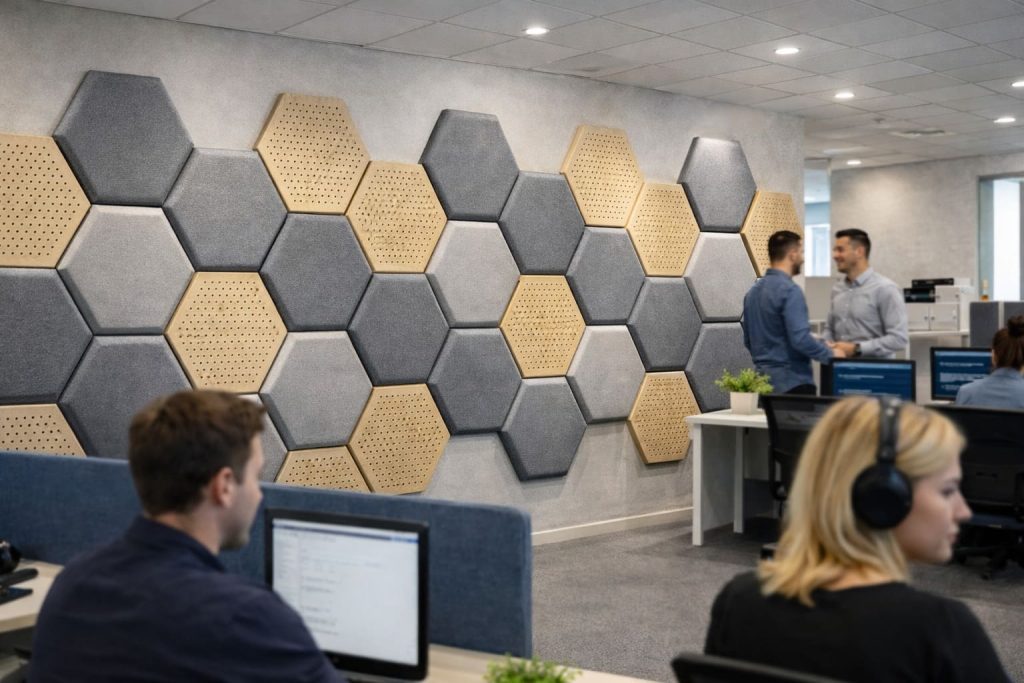
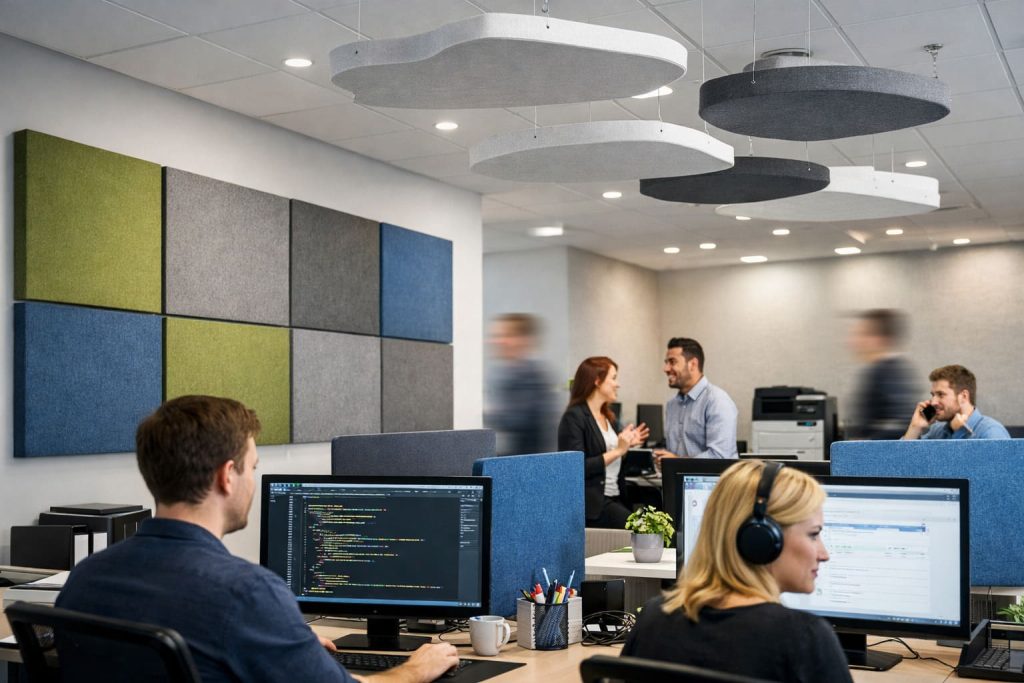
- Sound-absorbing panels: Installing acoustic panels on walls or ceilings helps reduce noise levels and shorten reverberation times. Available in a variety of shapes and colors, they can also serve a decorative purpose.
- Carpets and rugs: Soft flooring materials absorb sound and prevent it from reflecting. This is especially important in large spaces where sound travels easily.
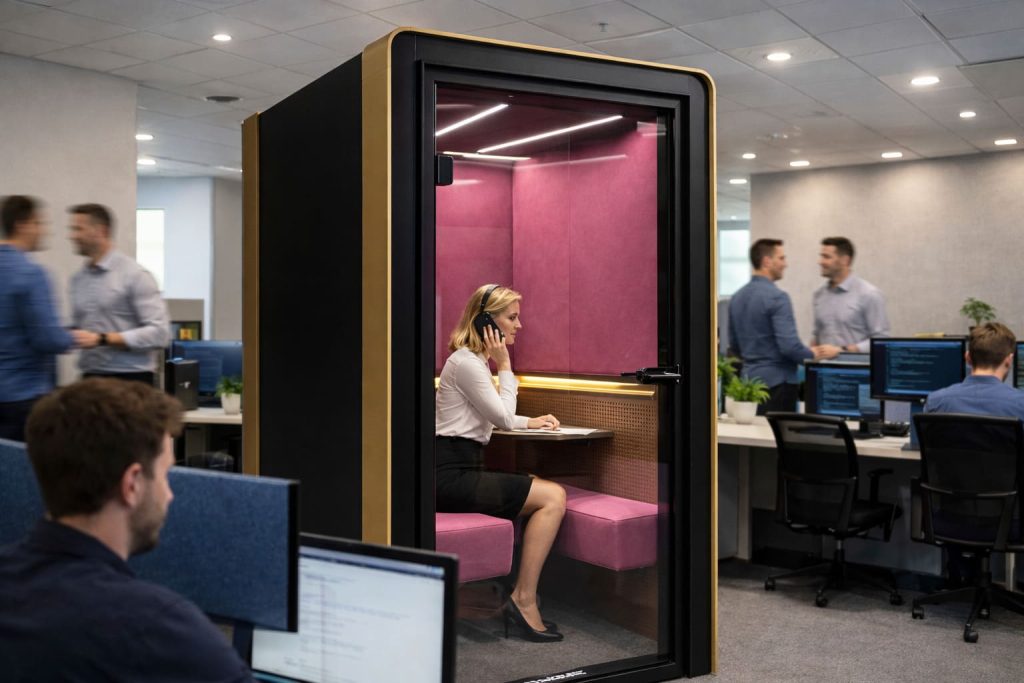
- Acoustic booths: Acoustically isolated spaces that allow for phone calls or focused work. They come in a variety of sizes, from small booths for one person to larger conference spaces.
- Plants: Plants in the office not only improve aesthetics but also reduce noise by absorbing sound. They also positively impact air quality.
- Space layout: Well-planned work areas, such as quiet and collaboration areas, allow for more effective sound management. For example, collaboration areas should be separated from areas requiring focus.
Technologies supporting acoustic management
Modern technologies can help monitor and improve office acoustics. Acoustic management systems use sensors to monitor noise levels and automatically adjust lighting, air conditioning, and space layout to improve acoustic comfort. It’s also worth investing in apps that help employees find quiet spots in the office.
Furthermore, AI-based technologies enable dynamic adjustments to acoustics in real time. For example, intelligent systems can automatically increase noise attenuation during peak hours, helping to maintain acoustic comfort.
It’s also worth considering sound masking. This technology introduces a subtle, frequency-adjusted noise into the office space, helping to mask unwanted sounds and increasing the sense of privacy among employees.
Acoustics and work efficiency
Good office acoustics are not just a luxury, but a necessity in modern workplaces. Investing in appropriate acoustic solutions brings tangible benefits in the form of increased productivity, improved employee well-being, and reduced staff turnover. Modern offices that prioritize acoustics create an environment that fosters both individual productivity and team collaboration.
By caring about acoustics, companies invest in the health and satisfaction of their employees, which translates into their long-term success. Furthermore, investing in acoustic solutions strengthens the company’s image as a modern and responsible employer that cares about the well-being of its staff. A conscious approach to employee education in the use of modern acoustic solutions is also crucial.
Moreover, good office acoustics positively impact employee relationships, fostering better communication and understanding. Reducing sound interference allows for more effective conversations and collaboration, ultimately resulting in better team performance and organizational goals.